



Product Discovery and UX Design
We run user research, journey mapping, and rapid prototyping, then validate UX design with real users, so engineering effort goes into features people will actually adopt.

FWC delivers custom software development services and full-stack development that turn ideas into secure, scalable, market-ready digital platforms.
Great products fail when engineering cannot keep pace with the roadmap: features slip, quality drops, and technical debt piles up. Enterprises and scale-ups need a partner who designs well, builds fast, and engineers for the long run.
FWC product engineering services cover the full life cycle: discovery, UX design, architecture, development, testing, release, and continuous improvement. Our cross-functional pods integrate with your product owners and tools, and we embed AI capabilities where they create real user value.

Roadmaps slip when teams lack capacity or specialist skills.
Rushed builds become expensive to maintain and extend.
Products built without user research struggle to gain traction.
Weak API development creates brittle connections with partners and systems.
We run user research, journey mapping, and rapid prototyping, then validate UX design with real users, so engineering effort goes into features people will actually adopt.

FWC scopes a focused first release around core user value, builds it to production standards, and launches quickly, giving you market evidence before larger investment.

Our engineers build responsive front ends and scalable back ends on proven frameworks, with clean architecture, automated tests, and documentation that make future changes straightforward.
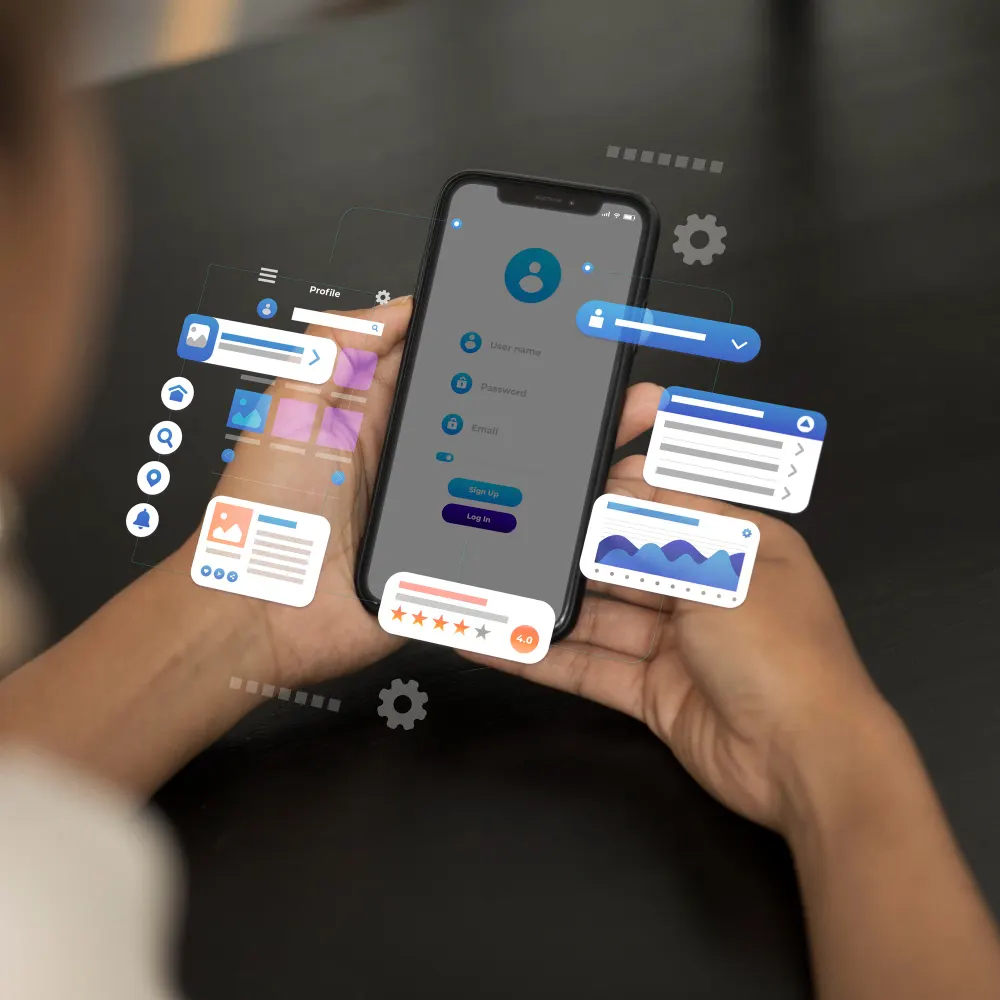
We develop native and cross-platform apps for iOS and Android, covering offline use, push notifications, secure authentication, and app store release management on both platforms.

FWC engineers multi-tenant SaaS platforms with subscription billing, role-based access, and well-documented REST and GraphQL APIs that partners can integrate with confidence and build on.

We build data pipelines, analytics dashboards, and embedded AI capabilities such as search, recommendations, and assistants, designed into the product architecture from the start.

Our QA engineers automate functional, regression, performance, and security testing inside CI/CD pipelines, catching defects early and keeping release quality consistent across web, mobile, and API layers.

We re-platform aging products, pay down technical debt, tune performance, and provide ongoing enhancement and support under agreed service levels, so established products keep earning revenue.
Align on users, outcomes, and scope.
Prototype and validate the experience.
Ship in short sprints with transparent demos.
Measure, improve, and scale after launch.
Focused MVPs and short sprints get products to users sooner.
Transparent demos and milestones keep stakeholders aligned.
Clean architecture and automated tests reduce rework.
Research-led design builds products users choose to keep using.

Cross-functional teams with an FWC delivery lead accountable for outcomes.

Audited code-quality benchmarks and milestone-linked deliverables.

Products designed to add AI features without rebuilding.

Full IP assignment under US jurisdiction on every engagement.
Body shops supply people; FWC supplies outcomes. Each engagement is led by an accountable delivery lead, with transparent sprint demos, audited code-quality benchmarks, and milestone-linked deliverables. Designers, engineers, and QA specialists work as one pod, and architecture decisions account for scale, security, and future AI features, so the product you launch is also the product you can keep growing.

RAG knowledge assistants, role-specific AI copilots, LLM fine-tuning, and GenAI platform engineering grounded in your enterprise data and protected by guardrails.
Explore Generative AI
Cloud strategy, migration, application modernization on Kubernetes, DevOps pipelines, platform engineering, and FinOps across AWS, Microsoft Azure, and Google Cloud.
Explore Cloud & Infrastructure
Vetted contract engineers, dedicated development teams, and 200+ niche skills, backed by top vetting, a 2-week pilot, and rapid replacement.
Explore IT Talent
AI strategy and readiness assessments, digital transformation roadmaps, enterprise architecture, and cloud strategy from consultants who stay through delivery.
Explore Technology ConsultingConnecting consulting to growth & impact, bringing together news, insights, articles, and decisions that shape the future.

Do You Need to Modernise Legacy Systems Before Adding AI? No, you do not need to replace every legacy system before introducing AI. What matters is whether the current environment can provide the data, integration, security and performance

AI costs often rise after the pilot because production introduces more than model usage. Real workloads add users, larger context, data retrieval, APIs, retries, monitoring, storage and infrastructure. The useful question is therefore not:

Identity Security in BFSI: Managing Human, Machine and AI-Agent Access The traditional identity security question was relatively simple: Which employee should have access to which system? That question is no longer enough. A modern financia
Product engineering services include product discovery, UX design, MVP development, full-stack web and mobile development, API and SaaS engineering, QA automation, and post-launch evolution.
Timelines depend on scope, but FWC focuses MVPs on core user value and often delivers a production-ready first release in a few months.
Yes. FWC contracts include full intellectual property assignment under US jurisdiction, so clients own all code and designs.
Yes. FWC runs a technical assessment, documents the codebase, addresses critical debt, and then continues feature development.
FWC offers dedicated product pods, end-to-end outsourced builds, and staff augmentation for existing teams.
Yes. FWC designs and builds secure, well-documented REST and GraphQL APIs with versioning, authentication, and developer portals for partners and integrations.
Tell us the outcome you need. An FWC architect will map the fastest governed path to get there.