



Generative AI Consulting
We help leaders select high-value use cases, choose between commercial and open-source models, estimate cost, and set a roadmap with measurable quality and adoption targets.

FWC delivers enterprise LLM solutions, RAG development, and copilots that give employees and customers accurate, secure answers they can trust.
Public AI tools are impressive, but they do not know your products, policies, or customers, and they create risk when sensitive data leaves your control. Enterprises need generative AI that is accurate, secure, and connected to their own knowledge.
FWC builds generative AI development services around retrieval-augmented generation, fine-tuning where it helps, and strong guardrails. We connect LLMs to your documents and systems, enforce access controls, measure answer quality, and deploy in the cloud or within your own environment.

Ungrounded models produce confident but wrong responses.
Sensitive information can leave the enterprise through public tools.
AI copilots fail when they sit outside daily workflows.
Pilots lack measurable quality and productivity metrics.
We help leaders select high-value use cases, choose between commercial and open-source models, estimate cost, and set a roadmap with measurable quality and adoption targets.
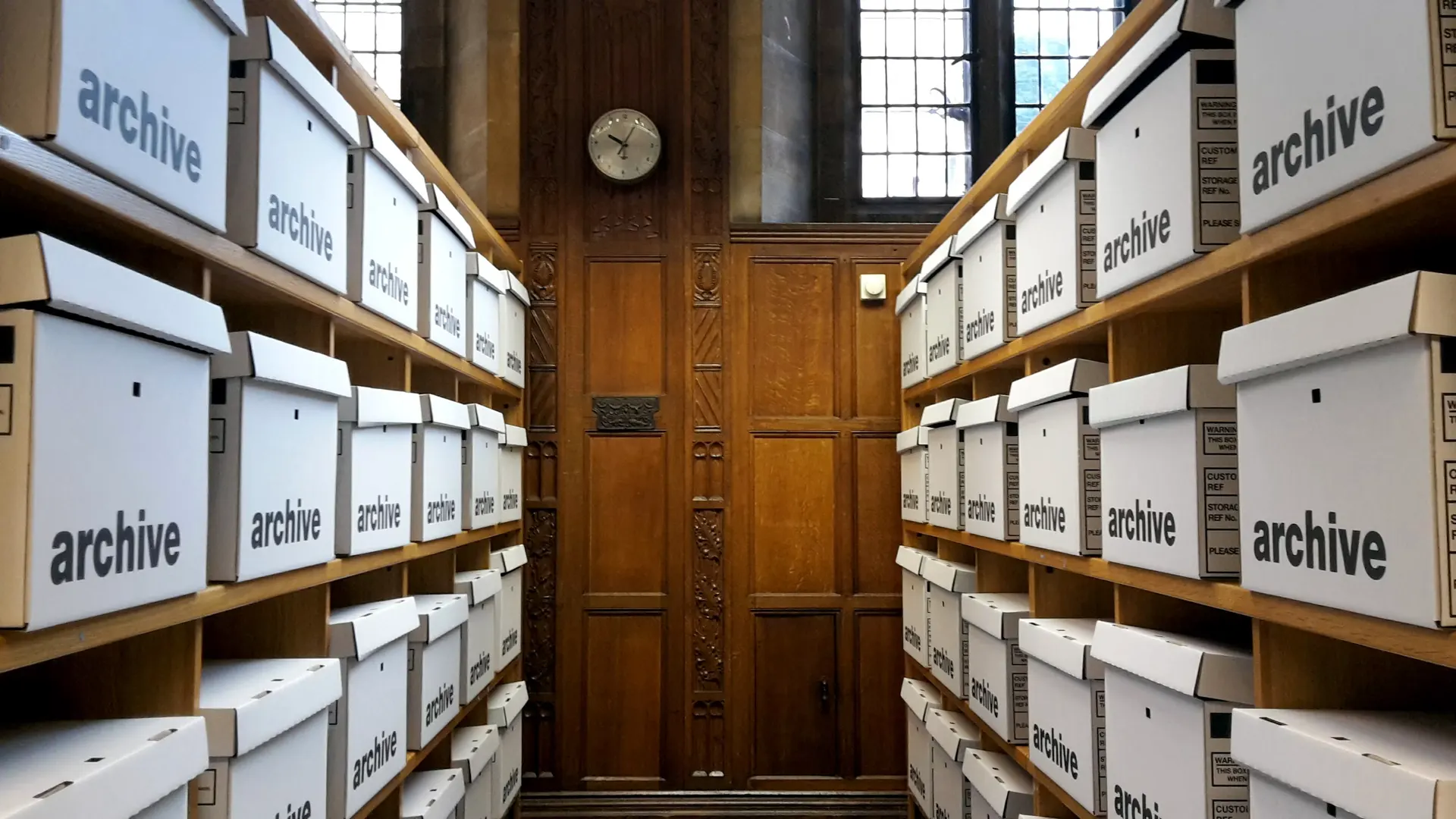
FWC builds retrieval-augmented assistants that answer from your policies, manuals, and records with source citations, respecting each user's access permissions to underlying documents and source systems.
Our teams develop AI copilots for sales, support, engineering, legal, and finance, embedded in the tools people already use and tuned to each role's tasks.

We adapt models through LLM fine-tuning and systematic prompt engineering, improving accuracy, tone, and cost for your terminology and specialist tasks, measured against agreed benchmarks before release.

FWC automates first drafts of proposals, reports, summaries, and responses from approved sources, with human review steps before anything is sent externally or added to official records.

We build custom generative AI features into products and internal tools, handling context management, streaming, latency, and fallbacks for a dependable user experience at production scale.

Our engineers set up vector databases, model gateways, cost controls, and LLMOps pipelines, giving teams a secure shared platform for building GenAI applications across the enterprise.

We implement AI guardrails for safety and privacy, run hallucination and accuracy tests on every release, and track answer quality in production with clear dashboards for owners.
Faster, consistent answers grounded in approved knowledge.
Instant proposal drafts and account research.
Code assistance and documentation search.
One search across scattered documents.
Employees find trusted information in seconds.
Responses follow approved knowledge and tone.
Drafting and research tasks take a fraction of the time.
Governance lets GenAI expand across departments with confidence.

Answers cite sources, and quality is measured continuously.

Role-based access and private deployment options.

Commercial and open-source models selected for each use case.

Copilots are embedded where people already work.
Many GenAI projects rely on prompt engineering alone and break when data or users change. FWC engineers the full system: retrieval pipelines, vector databases, access controls, evaluation suites, and LLMOps. Prompt engineering is one tuned component inside a monitored architecture, so quality is measurable, improvements are repeatable, and the system can scale across departments safely.

Autonomous and multi-agent systems that complete multi-step work inside CRM, ERP, and ticketing tools, with guardrails, audit logs, and human approval points.
Explore AI Agents
Conversational bots for customer support, IT helpdesk, HR, and recruiting that answer from approved knowledge, complete tasks, and hand off to people.
Explore AI Bots
Intelligent document processing, ERP and SAP automation, AI-powered decisioning, and agent-assisted workflows that handle exceptions as well as rules.
Explore AI Automation
AI strategy and readiness assessments, digital transformation roadmaps, enterprise architecture, and cloud strategy from consultants who stay through delivery.
Explore Technology ConsultingConnecting consulting to growth & impact, bringing together news, insights, articles, and decisions that shape the future.

Do You Need to Modernise Legacy Systems Before Adding AI? No, you do not need to replace every legacy system before introducing AI. What matters is whether the current environment can provide the data, integration, security and performance

AI costs often rise after the pilot because production introduces more than model usage. Real workloads add users, larger context, data retrieval, APIs, retries, monitoring, storage and infrastructure. The useful question is therefore not:

Identity Security in BFSI: Managing Human, Machine and AI-Agent Access The traditional identity security question was relatively simple: Which employee should have access to which system? That question is no longer enough. A modern financia
They include RAG knowledge assistants, enterprise copilots, LLM fine-tuning, content generation, GenAI platform engineering, and AI guardrails and evaluation.
Retrieval-augmented generation connects an LLM to your trusted data, retrieving relevant content before generating an answer, which improves accuracy and allows source citations.
FWC grounds answers in retrieved sources, adds citation requirements, applies guardrails, and runs evaluation tests that measure accuracy before and after release.
Yes. FWC can deploy models in your private cloud or on-premises environment when data residency or security requires it.
Not always. Many use cases work well with RAG alone. FWC recommends fine-tuning only when it measurably improves quality, tone, or cost.
AI copilots are assistants embedded in everyday tools that help people draft, search, and analyze. FWC builds role-specific copilots connected to your data with permission-aware retrieval.
Tell us the outcome you need. An FWC architect will map the fastest governed path to get there.